

This will be a long article. It is meant to be read over a stretch of time as for the next couple of weeks I will not be posting any further blog articles. This article is based on what the latest research done across the globe in 2024 and 2025 is indicating with regards family business. I have been reviewing in detail key findings from leading academic journals, conference proceedings and industry reports. The overarching themes underscore the strategic imperative of digital transformation, the complex yet vital role of the next generation, and the increasing emphasis on robust governance, proactive sustainability, and diversified growth strategies for long-term value creation and resilience. I will delve in all of these elements in this article.
(A) Digital Transformation and Artificial Intelligence in Family Businesses
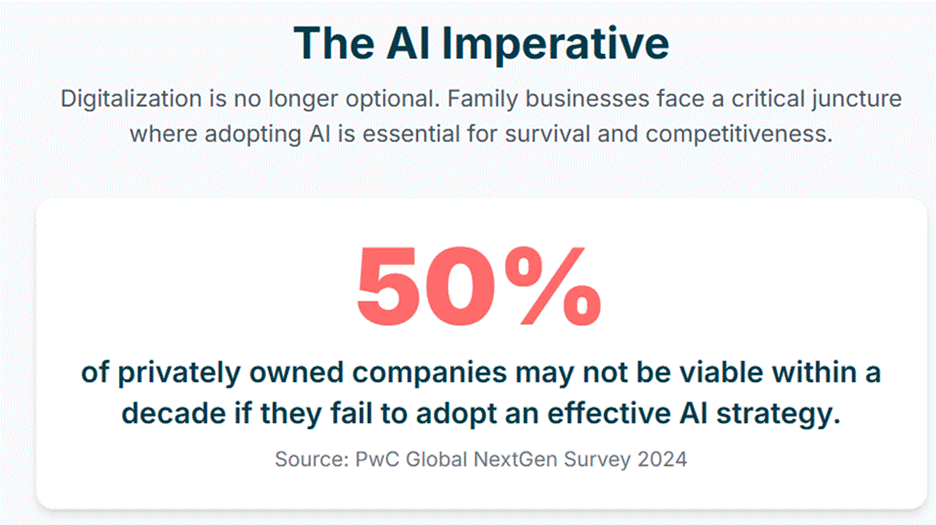
The integration of digital technologies, particularly artificial intelligence, has emerged as a paramount strategic concern for family businesses in all research articles issued in 2024 and 2025. Family Business Magazine identifies AI as the “top strategic priority for family-owned businesses in 2025,”. This shift reflects a broader understanding that AI is no longer a luxury but a fundamental requirement for maintaining competitiveness. The urgency is further underscored by PwC’s Global NextGen Survey 2024, which indicates that 70% of business leaders believe generative AI will profoundly alter how their businesses create, deliver, and capture value. Alarmingly, the survey also suggests that half of privately owned companies, including family businesses, may not remain viable within a decade if they fail to adopt an effective AI strategy.
While AI is widely acknowledged as a source of competitive advantage, its successful integration presents unique challenges for family businesses, often stemming from deeply embedded cultures and established governance structures. Research indicates that paternalistic leadership, for instance, can impede AI adoption, revealing a tension between the necessity of technological advancement and the inherent “familiness” of these firms. Successfully navigating this requires not just technological investment but also comprehensive organisational and cultural change management tailored to the family business context. Recent articles explore how family firms can leverage AI to achieve a balance between innovation and efficiency. Other studies delve into the behavioural and motivational aspects of digital adoption, exemplified by “Unpacking willingness in family firms facing the digital transformation”, and examine the influence of leadership styles on a family firm’s adaptive capacity to digital changes.
For family businesses, the implications are clear: overcoming internal resistance, investing in a skilled workforce, and developing bespoke AI strategies are crucial.
(B) Next Generation (NextGen) Leadership and Succession Planning
The transition of leadership and ownership to the next generation remains a central and complex theme in family business research. Deloitte’s 2024 Family Enterprise Survey highlights a notable divergence in perceptions between current and next-generation family members regarding their involvement in the business, ongoing ownership, and participation in decision-making. Specifically, current generations are almost twice as likely to believe that the next generation has a high level of participation in decision-making (28%) compared to the next generation’s self-assessment (15%).
This disparity in perceived decision-making participation suggests a potential source of friction and the underutilisation of NextGen talent. If the rising generation perceives a lack of meaningful influence, despite the senior generation’s belief to the contrary, it can lead to disengagement and a slower adaptation to new challenges, such as the rapid advancements in AI. This perception gap may also contribute to a higher propensity for NextGen members to consider selling their business interest, with 18% of the next generation planning to do so, compared to only 8% of the current generation expecting this outcome.

This situation underscores the critical need for structured engagement and clear empowerment mechanisms for the rising generation, especially given the ongoing “largest transition of family capital in history”.
Various conferences around the globe suggest a focus on strategic planning for wealth transfer, ensuring business continuity, establishing robust governance, and fostering the resilience needed for long-term success.
A growing trend identified by Deloitte’s survey is the increasing number of NextGen employees (29%) who have gained outside work experience before joining the family business, compared to current generation employees (48%) who have worked only within their family business. This external experience is viewed as a valuable practice that introduces fresh perspectives, diverse management styles, and new connections, potentially fostering partnerships that contribute to the family enterprise’s growth.
(C) Governance & Professionalisation
Robust governance frameworks are increasingly recognised as indispensable for the sustained growth and long-term viability of family businesses. KPMG’s Global Family Business Report 2025 unequivocally states that “Good Governance is crucial for the growth of a family business because it establishes clear decision-making processes, reduces conflicts and ensures long-term sustainability”. Research clearly indicates that high-performing family businesses are more often larger in scale (over 250 employees) and characterised by the presence of formal boards.

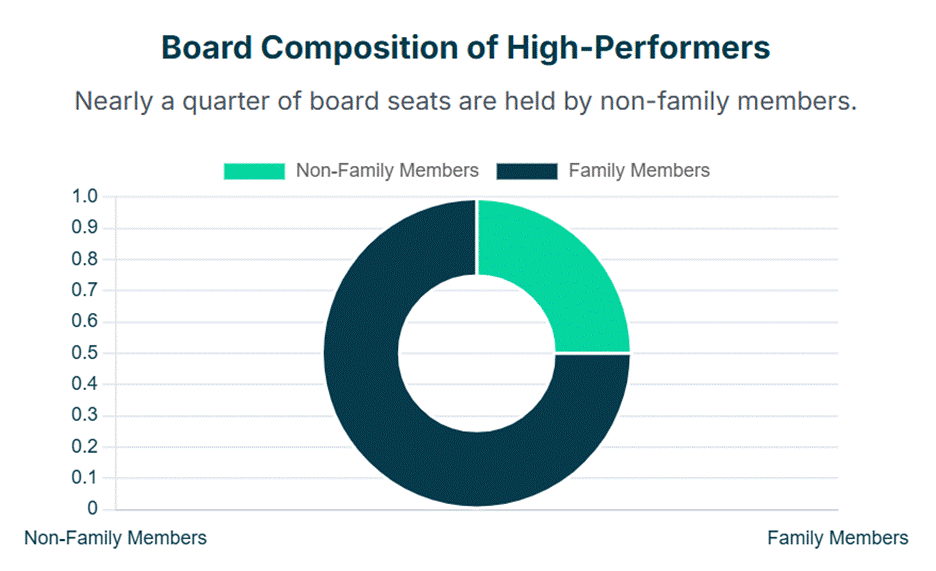
The composition of these boards is evolving, with a clear trend towards greater diversity and independent oversight. High-performing boards, according to KPMG, feature nearly one quarter of seats occupied by non-family members and approximately one third by women. This highlights a growing recognition of the value that independent and diverse perspectives bring to strategic decision-making and overall performance.
The increasing adoption of formal governance structures, diverse boards, and the integration of professional non-family talent in family businesses signifies a strategic shift towards best practices. This shift is driven by a desire for enhanced performance, reduced internal conflicts and the capacity to scale effectively. This suggests that professionalisation serves as a catalyst for resilience and growth, enabling family businesses to navigate increasing complexity and ensure long-term continuity, especially in the context of significant intergenerational wealth transfers.
Furthermore, research is also indicating that the establishment of formal family constitutions is gaining prominence. These documents formalise the relationship between the family and the business, providing clarity and structure that contribute to long-term stability and strategic planning.
(D) Sustainability
Sustainability has transitioned from a peripheral concern to a core strategic priority for family businesses in 2024-2025. KPMG’s 2025 report emphasizes that developing “deliberate approaches to sustainability is increasingly becoming a strategic priority for family businesses”. This shift is not merely about compliance or reputation; it is directly linked to business performance. A significant finding from KPMG’s research highlights that 80% of family businesses actively engaged in their community, environment, employees, and suppliers—demonstrating “High to Medium” levels of sustainability—also reported high business performance. This strong empirical correlation suggests that sustainability is increasingly viewed as a value-creation strategy rather than solely a cost or philanthropic endeavour.
While family businesses often have a long-term orientation that naturally aligns with sustainability, there is still work to be done in effectively measuring their environmental impact, with less than 50% of businesses feeling they are able to do so.
(E) Growth Strategies and Financial Dynamics
Growth remains a critical objective for family businesses, with recent research highlighting an increasing openness to external capital and strategic partnerships. Mergers and acquisitions (M&A) have become an “increasingly important priority” for family businesses, according to KPMG’s 2025 report. The research indicates that businesses engaging in M&A activity experienced, on average, a 14% higher business performance compared to those that did not. This trend is further supported by the EY 2025 Index, which found that nearly half (47%) of the 500 largest family businesses were involved in at least one M&A transaction in the last two years. Interestingly, the majority of these acquisitions (63%) targeted other family businesses, suggesting a preference for integrating entities with similar ownership structures and values.
Family businesses are also increasingly recognising the opportunity to source “growth capital” from third parties, including private equity (PE) funds and family offices. This marks a significant departure from traditional, often insular, growth models. The shift is driven by the understanding that external capital can provide not only financial resources but also “leverage expertise and enhance operational performance”.
Beyond external capital, research also emphasises the internal drivers of performance. A study on “Does the intellectual capital affect family businesses’ strategic performance?” found that intellectual capital significantly influences value creation and enhances strategic performance. This is further explored in “Business performance of family firms: exploring the roles of knowledge management, innovation and competitive advantage”. Intellectual capital (IC) represents a critical, often undervalued, asset for family businesses, profoundly influencing their capacity for value creation and strategic performance. This report meticulously examines the multifaceted nature of IC, dissecting its core components—human, structural, relational/social, and cognitive capital—within the distinctive context of family firms. To foster enduring success and ensure transgenerational continuity, family business leaders are encouraged to implement the following strategic recommendations for enhancing their intellectual capital:
Invest in Human Capital Deliberately:
- Implement merit-based recruitment and development programs for all employees, both family and non-family. This fosters individual growth, encourages innovative capabilities, and ensures the best talent is attracted and retained.
- Prioritise continuous learning and professional development initiatives to ensure that skills remain relevant and competitive in a dynamic market.
- Cultivate psychological ownership and offer competitive remuneration and benefits to motivate and retain a highly engaged workforce.
Master Intergenerational Knowledge Transfer and Succession:
- Initiate succession planning early, developing successors broadly and aligning their individual aspirations with the long-term needs of the business.
- Implement both formal and informal knowledge transfer mechanisms, with a particular focus on codifying tacit knowledge from experienced family members into accessible organisational assets.
- Address the common reluctance of founders to decentralise control through structured governance frameworks and clear communication, facilitating a smoother transition of authority and knowledge.
Build Robust Structural Capital:
- Systematise core processes, systems, and communication modes to ensure consistency, efficiency, and scalability of knowledge across the organization. This transforms individual expertise into enduring organisational assets.
- Strategically adopt technology and digitization to streamline operations, enhance data management, and foster a more agile and innovative environment.
- Strengthen governance structures with independent boards and implement robust financial management practices to enhance external credibility, improve decision-making, and attract external capital when needed.
- Formalise and protect intellectual property, such as patents and trademarks, and explore strategic ways to leverage these assets for broader industry impact and brand enhancement.
Nurture Relational Capital Internally and Externally:
- Utilise formal family governance practices, including regular family meetings, family councils, and a well-defined family constitution, to strengthen family identity, foster trust, and ensure a shared purpose across generations.
- Actively develop and leverage external networks with customers, suppliers, financial institutions, and strategic partners. These relationships provide access to new markets, resources, and external knowledge that can fuel growth and innovation.
- Ensure capital alignment with external investors, carefully balancing financial needs with the family’s desire to maintain control and preserve its core values.
Foster a Culture of Knowledge Management and Continuous Innovation:
- Embed knowledge management processes—including knowledge accumulation, integration, and codification—as a core operational discipline throughout the organisation. This ensures that knowledge is systematically captured, shared, and applied.
- Promote a culture of continuous innovation, experimentation, and adaptability. This dynamic capability is essential for maintaining a competitive advantage, responding to market shifts, and ensuring the ongoing renewal and growth of the firm’s intellectual capital.
(F) Family Dynamics & Conflict
The intricate interplay of family and business continues to be a rich area of research, with a notable focus on conflict resolution Studies such as “The anatomy of family business conflict” and “The impact of managers’ personality on task and relationship conflict: The moderating role of family and non-family business status” delve into the nature, origins, and behavioural aspects of internal disagreements within family enterprises. These investigations aim to provide a deeper understanding of how conflicts arise and how they can be managed effectively to preserve both family harmony and business continuity. These studies conclude that conflicts in family businesses are often multi-layered, stemming from the intertwined personal and professional relationships. They differentiate between various types of conflict, such as “task conflict” (disagreements over work-related issues) and “relationship conflict” (interpersonal friction), and analyse how these manifest uniquely within a family context. The latest research delves into the root causes of these disagreements. This could include factors like:
- Succession issues: Disagreements over leadership transitions, roles, and power.
- Differing visions: Discrepancies in strategic direction or business goals between family members.
- Fairness and equity: Perceptions of unequal treatment in compensation, roles, or opportunities.
- Communication breakdowns: Lack of clear and open communication channels.
- Personality clashes: How individual managerial personalities interact, and how this interaction is moderated by the family or non-family status within the business.
The mentioned studies conclude that the unique emotional bonds and history within families influence how conflicts are expressed and handled. They might identify specific behavioural patterns during conflict, such as avoidance, aggression, or passive resistance, and how these differ from conflicts in non-family firms. The “moderating role of family and non-family business status” suggests that the family context itself changes how personality traits impact conflict, potentially making relationship conflicts more intense or harder to resolve due to personal stakes. The ultimate aim of this research is to strengthen conflict resolution. Therefore, their conclusions propose strategies for managing these conflicts effectively. This could include:
- The importance of formal governance structures (e.g., family councils, clear policies) to depersonalise disputes.
- The important role of professional mediators or advisors.
- Developing strong communication skills and emotional intelligence within the family.
- Strategies for separating family issues from business issues.
- Tailored approaches that acknowledge the unique interplay of family dynamics and business objectives to preserve both harmony and continuity.
In essence, these studies provide detailed insights into why conflicts happen in family businesses, how they manifest, and what specific interventions are most effective given the unique blend of personal and professional relationships.
(G) Resilience, Crisis Management and Risk
Family businesses are inherently designed for longevity, and recent research in 2024-2025 continues to explore their unique approaches to resilience, crisis management, and risk mitigation. Studies examine how family firms adapt to economic downturns, such as “Family firm employment behaviour during a financial crisis: Does generational stage matter?”, and directly compare their resilience to non-family firms during crises. Insights into effective crisis response are also provided by research analysing the combinations of family business involvement and leadership styles that influence performance during challenging times.
Statistical data starkly underscores this critical need for resilience: the average lifespan of a family business is often cited as barely 24 years, with a disconcertingly small percentage successfully navigating the transition to the second, third, and fourth generations. For example, only 30% of family businesses in the USA successfully transition to the second generation, 13% to the third, and a mere 3% to the fourth. This high mortality rate across generational transfers directly links resilience to the very survival and perpetuation of the family’s legacy. Unlike non-family firms, which might be acquired, dissolved, or undergo leadership changes without the same profound personal implications, the failure of a family business often signifies the loss of family property, a tarnished family reputation, and the jeopardization of a cherished legacy. This creates a significantly higher stakes environment for family businesses, where resilience is not just about competitive advantage or thriving in the market; it is fundamentally about existential continuity. This deep-seated motivation drives unique strategic choices and resource allocations that distinctly differentiate family enterprises from their non-family counterparts.
While family business have an inherent powerful source of resilience, this presents then with a unique set of Strengths and potential weaknesses for family businesses during adversity.
Strengths:
- Cohesion and Commitment: Family businesses benefit from strong internal cohesion and a deep commitment to the enterprise, fostering unity during crises.
- Long-Term View: Their transgenerational orientation allows for strategic patience and decisions that prioritize long-term sustainability over short-term gains.
- Robust Social and Patient Financial Capital: Strong social networks facilitate access to vital support and information, while patient financial capital provides buffers against economic shocks.
- Quick Decision-Making and Improvisation: Concentrated ownership often enables faster decision-making processes and greater agility in responding to unforeseen events.
- Lower Employee Turnover: Employees often exhibit higher loyalty and lower turnover rates due to a stronger connection to the family and a perception that the family genuinely cares about their well-being.
Vulnerabilities:
- Emotional Biases: Decision-making can be influenced by emotional factors, potentially leading to choices that are not purely rational from a business perspective.
- Succession Hurdles: The process of leadership transition is often fraught with emotional, structural, and governance complexities, leading to high failure rates across generations.
- Conflict Avoidance: A desire to preserve family harmony can lead to the avoidance of necessary difficult conversations, potentially allowing issues to fester and escalate into more significant conflicts later.
- Potential for Nepotism and Cronyism: Hiring decisions may be based on family relationships or personal connections rather than merit, potentially impacting organizational effectiveness.
- Reluctance to Diversify, Acquire, or Invest in R&D: Family firms may show a preference for consistency and organic growth, making them less likely to engage in diversification, large-scale acquisitions, or significant R&D investments, which can limit growth opportunities or expose them to concentration risks.
This creates a paradox: while family firms are generally risk-averse in market-driven contexts , they are willing to take significant “legacy risks” to protect their socioemotional wealth and ensure continuity. This selective risk-taking, while safeguarding core values, can also limit growth opportunities or expose them to concentration risks if not balanced with strategic renewal. This means that close family ties is therefore a double-edged sword for resilience. While it provides deep intrinsic motivation and loyalty, it can also lead to insularity, resistance to necessary external changes (e.g., professionalisation, partnerships), and internal conflicts if not actively managed. The ongoing challenge for family businesses is to harness their unique strengths while proactively mitigating these inherent vulnerabilities
Risk management is another critical area, with KPMG highlighting the importance of “Effective diversification and risk management practices” for long-term value creation. Deloitte’s 2024 Family Offices Insights Series identifies “recession fears, geopolitics and inflation” as the top three market risks for family businesses with managing investment risk as their foremost strategic priority. This indicates a clear certain level of awareness of macro-level economic and geopolitical uncertainties.
Despite this awareness, a critical vulnerability has been identified in the area of cybersecurity. A notable 43% of family businesses reported experiencing a cyberattack in the last 12-24 months, with 25% facing three or more attacks. However, this high incidence of exposure is contrasted by a significant lack of preparedness: nearly a third (31%) of family businesses lack a cybersecurity strategy, and 43% admit their existing strategy is inadequate. This reveals a substantial gap between perceived macro-level risks and the tangible, immediate operational vulnerabilities posed by digital threats. This disconnect suggests that family businesses, despite their long-term orientation, may be underinvesting in or underestimating the immediate, tangible threats posed by digital risks, which could undermine their continuity and wealth preservation. This underscores an urgent need for improved risk governance and increased investment in digital resilience.
Conclusion
The research landscape for family businesses in 2024 and 2025 reveals a vibrant and evolving field, characterised by a confluence of traditional concerns and emerging challenges. Digital transformation, particularly the integration of AI, stands out as an urgent imperative, demanding strategic adaptation and cultural shifts within family enterprises. The role of the next generation is increasingly recognised as critical for future success, yet effectively bridging the “participation gap” in decision-making remains a key area for development. The growing emphasis on robust governance, diverse board compositions, and professionalisation signals a strategic institutionalization of best practices to ensure long-term sustainability and navigate complexity. Furthermore, sustainability and ESG principles are firmly establishing themselves not just as ethical considerations but as significant drivers of business performance. Finally, family businesses are demonstrating a growing openness to external growth strategies, including M&A and private equity, recognising their potential to accelerate growth and enhance operational capabilities.
In this rapidly evolving global economy, the stakes for family businesses have never been higher. Those family businesses that fail to proactively address all of these critical, interconnected dimensions—digital transformation and AI integration, cultivating the next generation, establishing robust governance and professionalisation, embedding sustainability and ESG principles, and strategically exploring external growth avenues—will find their traditional strengths eroding rapidly. Their legacy will be jeopardised, their competitive edge blunted, and their very existence threatened, leaving them with a perilously slim chance of future sustained and continued success.
 A Business Blog for SMEs & Family Businesses
Pingback: De la tradición a la inteligencia artificial: La silenciosa reinvención de las Empresas Familiares – Sostenibilidad en las Empresas familiares con Peter Guerrero