
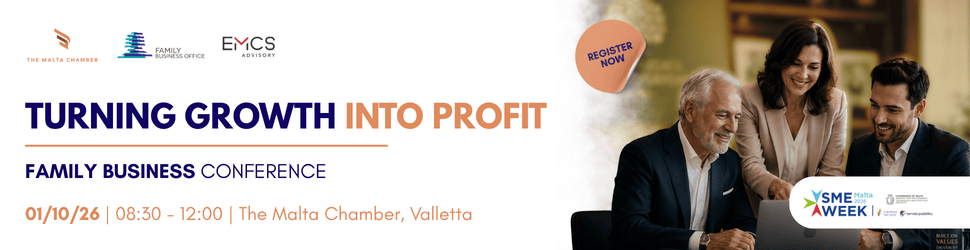
To navigate the complexities of running a modern family enterprise, the Family Business Survey 2026 examines the internal tensions between commercial expansion, boardroom formalisation, and relational dynamics. Rather than treating challenges in isolation, the 2026 Family Business Research study looks across the full life cycle of family business—from daily operational bottlenecks and succession readiness to margin pressures and technological disruption. The upcoming Family Business Conference on 1st October 2026 will unpack these ground-level realities, providing evidence-based insights to resolve the most pressing questions facing family business owners, directors, and successors today. The Conference will address these cardinal questions:-
- Why did 37% of family businesses experience higher revenues alongside declining profit margins between 2022 and 2025, and what structural changes prevent top-line volume from diluting bottom-line returns?
- How can family leaders break the cycle where the vast majority remain so overwhelmed by routine operational tasks that executive teams cannot allocate time to long-term planning?
- What tangible commercial and strategic benefits do outside, non-family Non-Executive Directors (NEDs) provide, and how do they help stabilize profit margins?
- In an economic climate where rising payroll costs consistently outpace top-line growth, how can family firms optimise workforce productivity without falling into unsustainable hiring patterns?
- Why do family business owners overwhelmingly agree that specialised leadership training is vital to steer a family firm, while the vast majority still operate with no formal policy requiring family managers to be trained?
- Why are modern family businesses placing greater emphasis on soft skills—such as leadership, communication, and teamwork—over purely technical skills when training their teams?
- Is artificial intelligence being adopted defensively as a quick fix for operational bottlenecks, or can it be deployed offensively to forecast demand and drive new revenue streams?
- Why do nearly many Maltese family businesses view cross-border expansion as unlikely, and what strategic capabilities are required to de-risk international growth?
- How can family businesses pragmatically incorporate sustainability and environmental standards without overburdening operational costs?
- How does implementing regular financial reporting and Key Performance Indicators (KPIs) allow management to detect operational inefficiencies and cost leakages before margins disappear?
- How can family businesses move beyond drafting legal share transfer documents to successfully execute on-the-ground operational onboarding and leadership development for the next generation?
- What governance frameworks and employment policies are needed to ensure fair compensation, clear boundaries, and parity between active family managers and non-managing or non-shareholder relatives?
- Why does interpersonal conflict peak during growth stage pf a family business, and how can leaders institutionalise mediation before operational friction harms business performance?
- What lessons can wholesale, retail, and service family firms learn from manufacturing and multi-sector groups to effectively implement digital automation and curb rising wage costs?
- How can boards of family businesses transition from being rubber-stamping bodies dominated by a single authoritative figure into genuinely independent forums for strategic accountability?
- How do expanding family businesses design transparent dividend policies that satisfy inactive family shareholders while protecting the cash flow needed for corporate reinvestment?
- In the case where family continuity is unfeasible, why do leaders default to third-party trade sales, and when does a Management Buyout (MBO) by key employees offer a more viable continuity path?
- Why do family businesses operating without a formal board consistently undervalue governance reform, and what is the real bottom-line cost of postponing the formalisation of proper corporate governance?

